Case study

Process optimization & new ways of working with a composable, AI-enhanced design system

COMPANY

GROPYUS

YEAR

2025

CONTRIBUTION

PRODUCT DESIGNER, FTE

TARGET

INTERNAL, CROSS PRODUCT

SCOPE

PRODUCT DESIGN, UX/UI, RESEARCH

DLSv2 (Design Language System version 2) is the evolution of the first design system at GROPYUS, with a mission to reflect GROPYUS brand & UX principles across products, while improving time-to-design, time-to-develop, design-to-dev handover, design system maturity, composability, and enabling compatibility with coding genAI tools (for faster prototyping and 'with-code' design handovers).
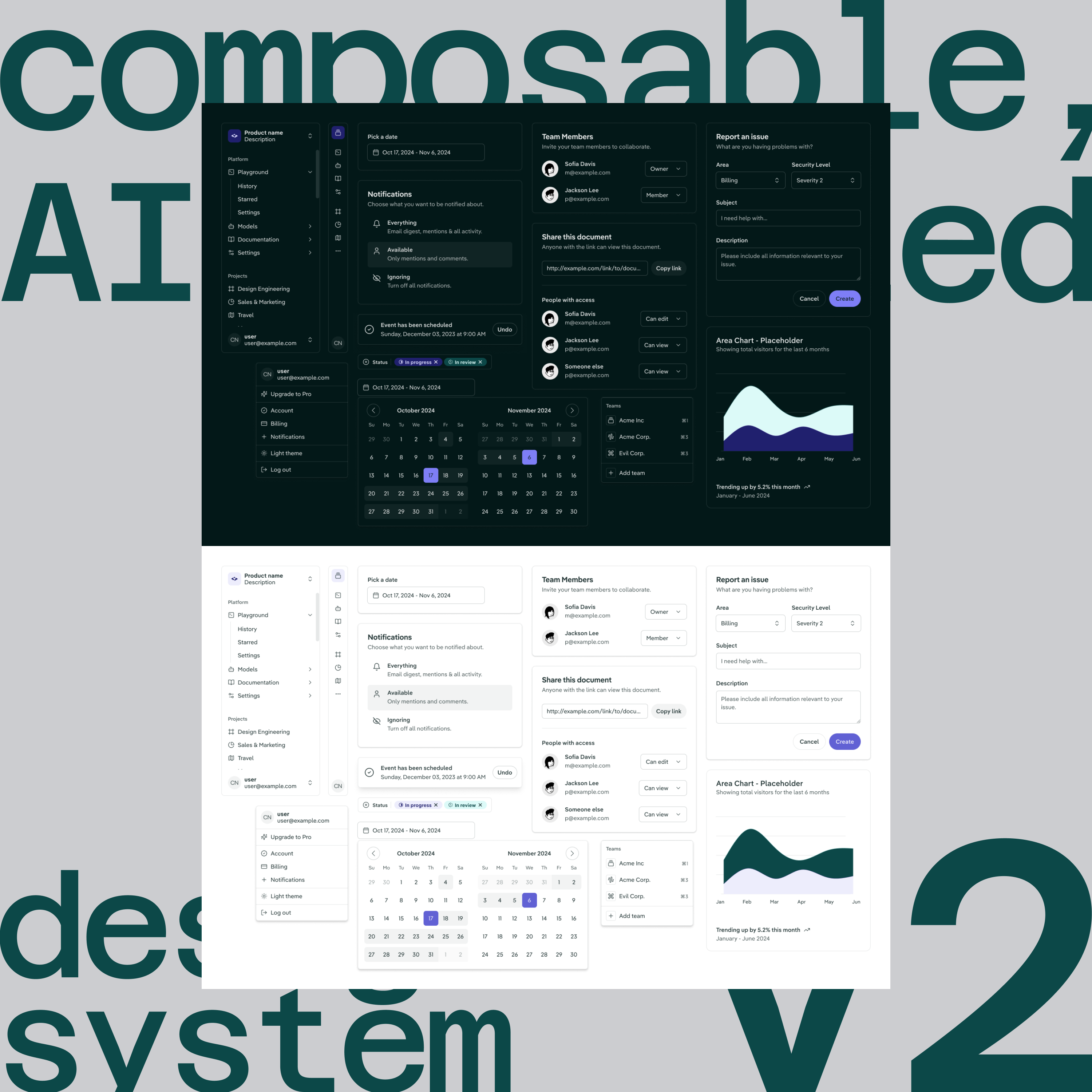
In a team of 4 FE engineers and another product designer, I initiated the project by running research to identify current process bottlenecks and led the strategy to evolve the first version of the GROPYUS design system. I identified improvements, managed stakeholder communication, and guided the migration process. I delievered a fully-fledged Figma UI kit and collaborated with FE engineers to deliver a DLSv2 component library. I identified suitable coding genAI tools and documented a strategy on how to use it.

Impact

35% reduction in UI design time

30% increased software engineering efficiency

1-to-1 reflection of design-to-implementation

2x faster prototyping for user testing and demos

AI-native PM–design–engineering collaboration

With-code design handover

System actively used across 6+ products

Full system adoption within 2 weeks of release
Discovery

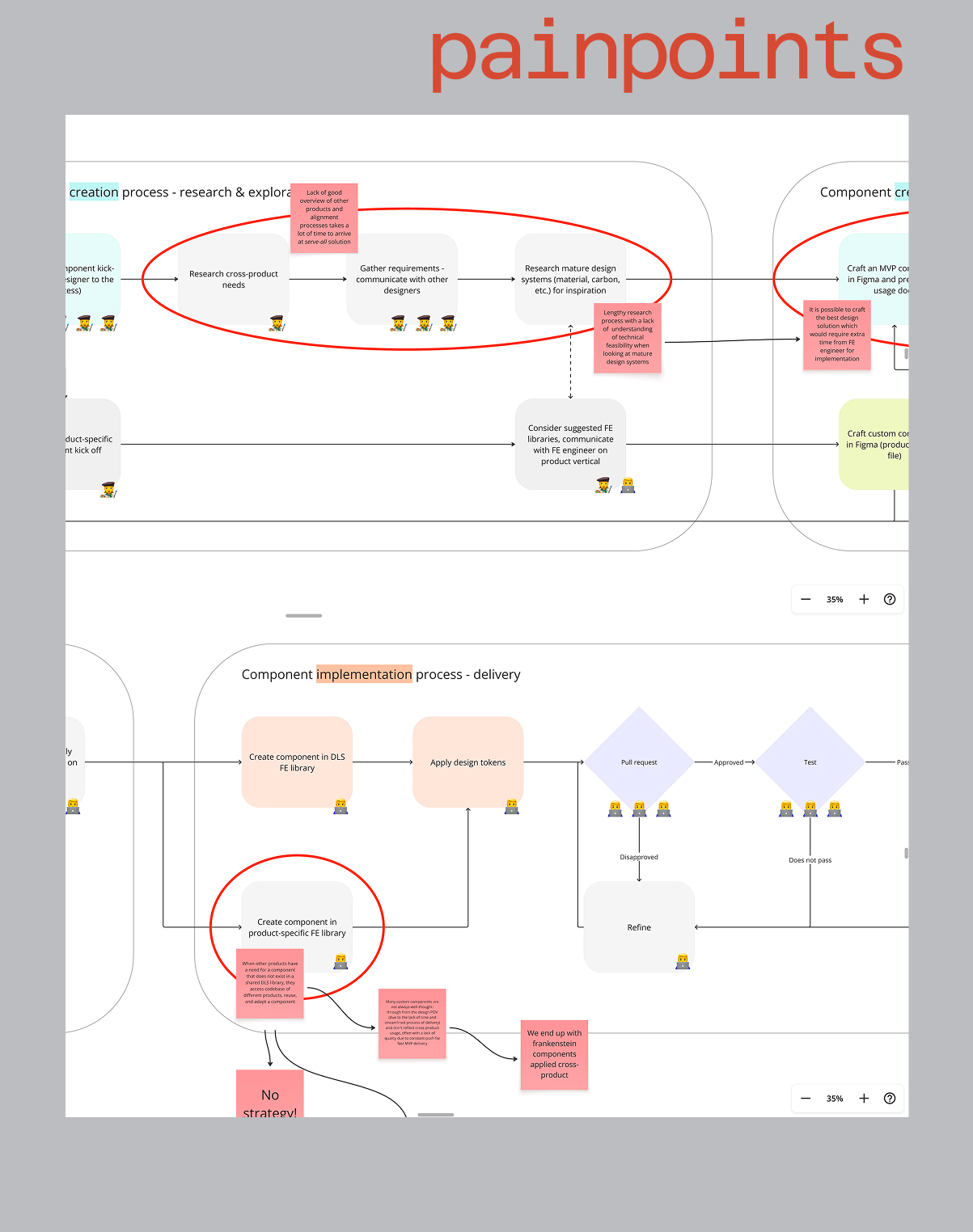
Understanding the problem space through process map & painpoints

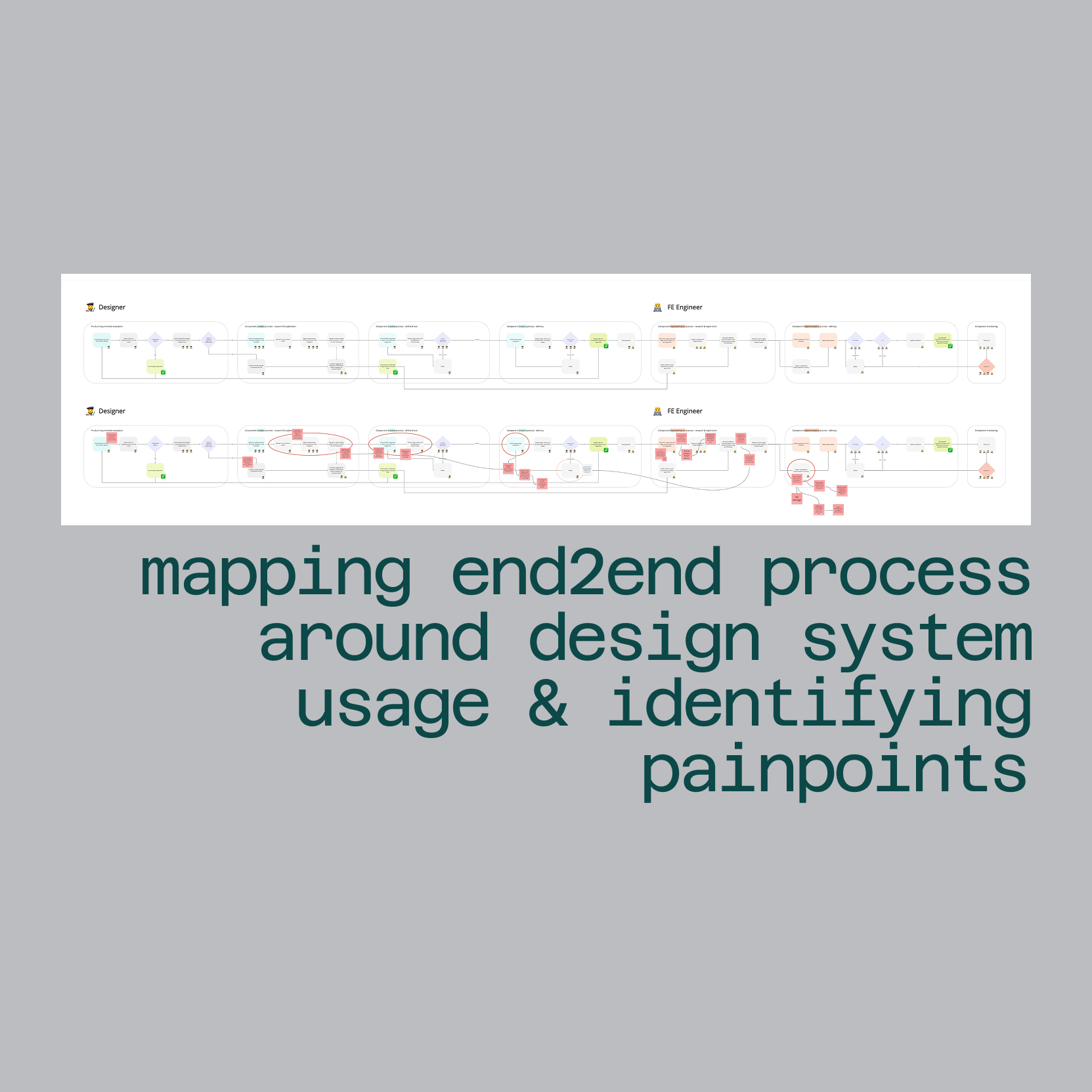
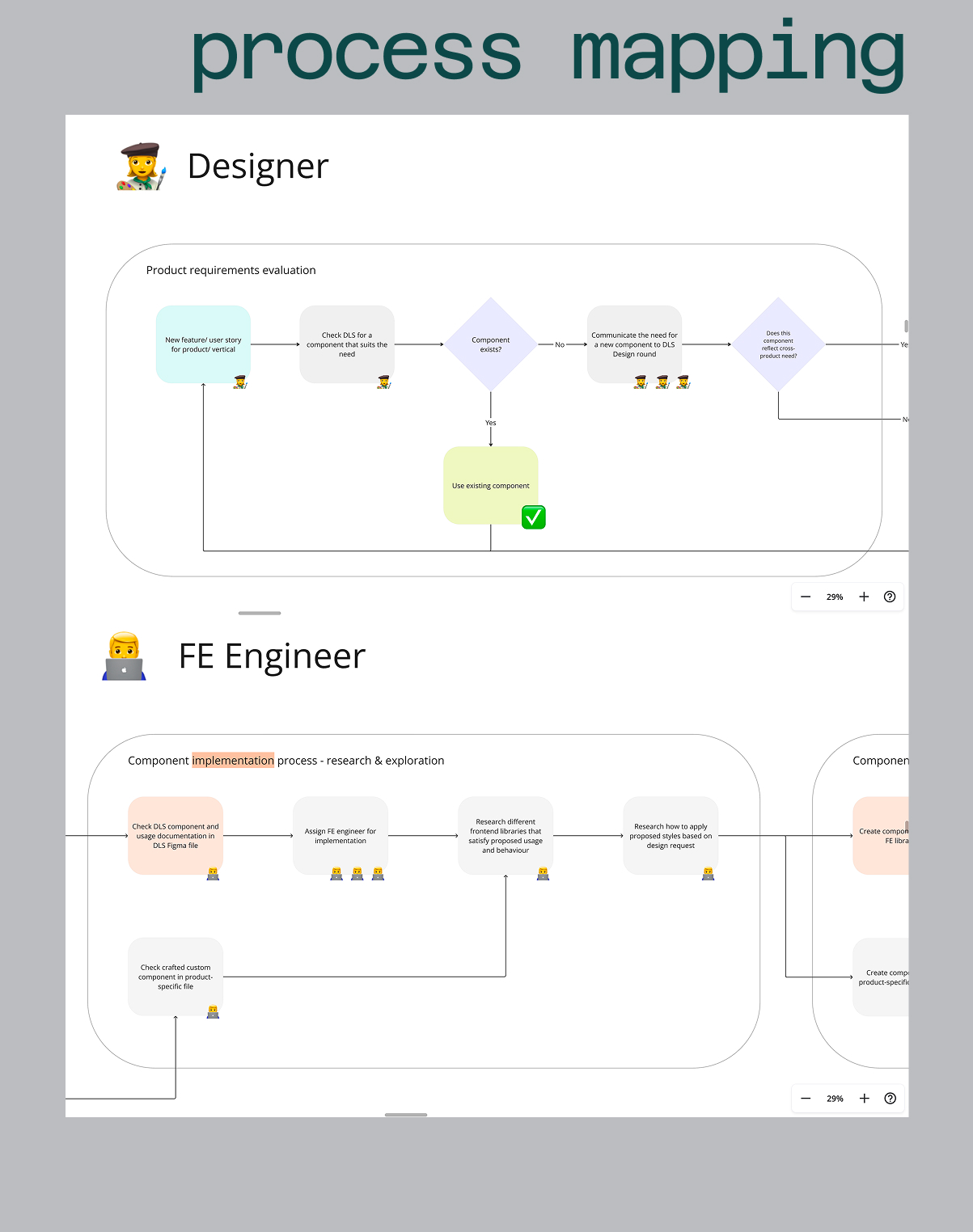
I documented the complete DLSv1 component delivery lifecycle in close collaboration with both designers and frontend engineers. The goal was to map the whole component-creation process - decisions on what is a part of a design system, scoping, designing, and implementing, as well as to identify inconsistencies and time-drain, and where collaboration falls apart.

I facilitated targeted discussions/ interviews with core stakeholders - designers, frontend engineers, and product managers, as direct customers and contributors of the DLS. Their input helped uncover specific friction points across the delivery process. Furthermore, by regularly sharing progress, validating observations, and gathering feedback as new insights emerged, I kept the process transparent and inclusive.
Major painpoints

Design intent from Figma was frequently lost or misinterpreted by engineers.

Designers and engineers spent significant time aligning on behavior that wasn't well-documented.

Final implementations often didn't match the intended user experience.

Implementation libraries varied, leading to inconsistent behavior across products.

Components were often rebuilt from scratch without clear reuse guidance.

Design specs lacked clarity, especially around micro-interactions and edge cases.

Constraints

DLS is an initiative with volunteering-based contribution model. With low priority and without a dedicated team, production and maintenance are compromised.

GROPYUS has 10+ digital products with UI, and only 4 product designers. All products varied majorly in terms of the type (internal, B2B, B2C) and the industry — it's very difficult to enable sufficient support and have a 'one-fit-all' solution.

Opportunities

Minimal legacy debt: GROPYUS's extensive portfolio of MVP-stage products presents an opportunity for agile changes since there are no strict legacy constraints.

Early validation culture: GROPYUS's innovative strategy allows showcasing immature prototypes and demos to potential customers/users, enabling rapid validation of new product concepts before full development.

Definition

Translating findings into a context-aware, scalable, solution

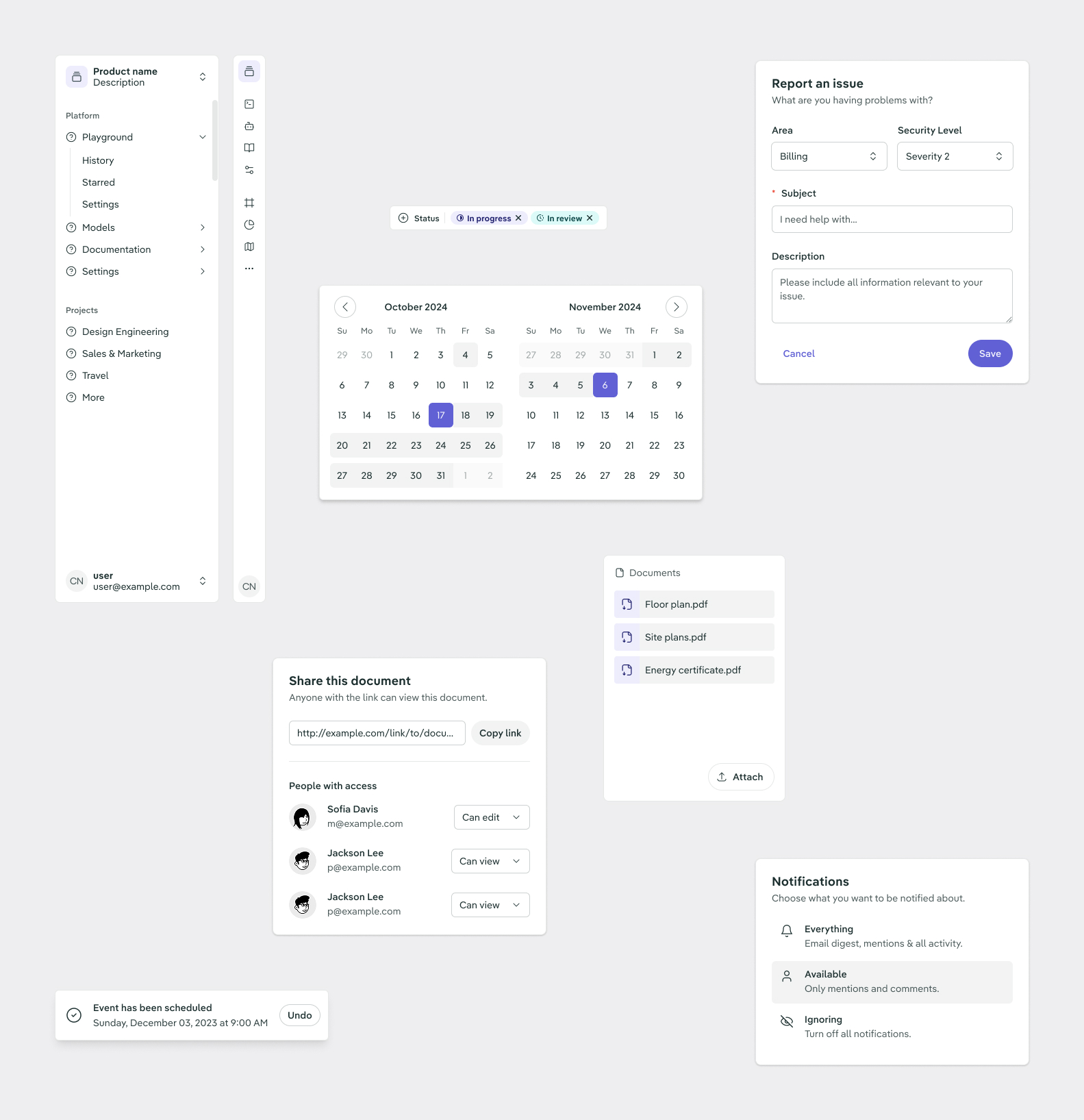
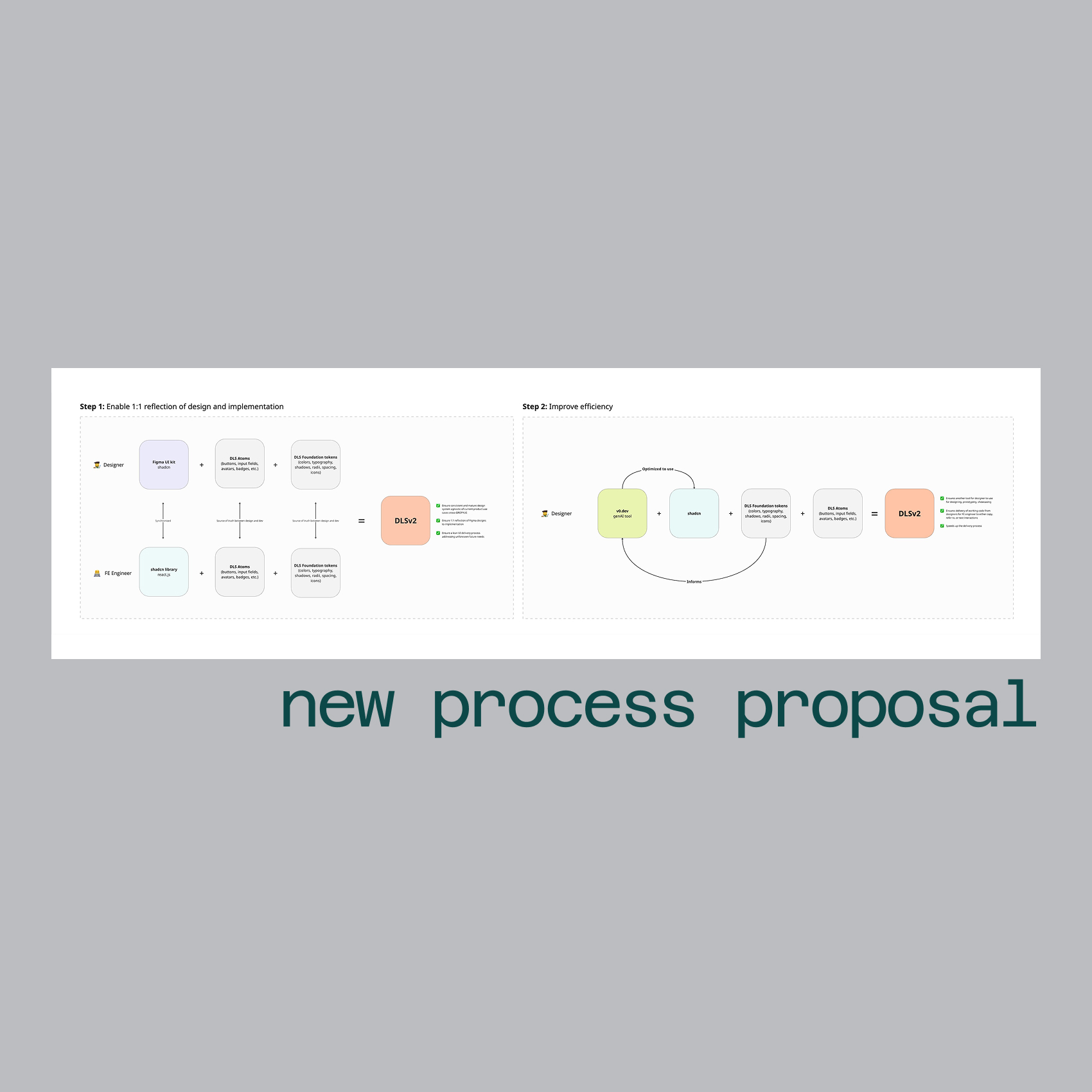
We decided to adopt a default shadcn/ui library as a starting point, applying our brand, UX principles, and neccessary adjustments, in order to streamline design-to-development time and maturing the system. This allows our short-staffed teams to shift focus towards crafting overarching digital experiences rather than focusing on defining and implementing micro-interactions of individual web components.

We set up a composable design system following Atomic Design Methodology, where DLSv2 mainly defines basic 'atoms.' Since GROPYUS has many different products, bigger patterns made for specific products are carefully checked if they can be used across others. This keeps our main design system light, adding only parts that are evaluated as 'cross-product reusable'.

Our strategic choice to build DLSv2 upon shadcn/ui unlocks a powerful synergy with coding genAI tools. Since many of these tools are trained to generate frontend code using shadcn/ui as a foundational library, and since at GROPYUS we build frontends as next.js apps, feeding our defined GROPYUS token values and styles in Tailwind CSS format allows us to leverage AI capabilities to our distinct advantage.

This design system-level symbiosis enables a new way of working between product management, design, and engineering. In an AI-native setup, i.e. with Claude Code, functional code prototypes are created much earlier, directly within the codebase and based on the defined design system. In some cases, PM can use Claude Code to prototype instead of write PRDs, designer enhances the prototype, enables it for user testing, refines based on findings and prepares it as ready-for development with code, which devs use to integrate it into production.

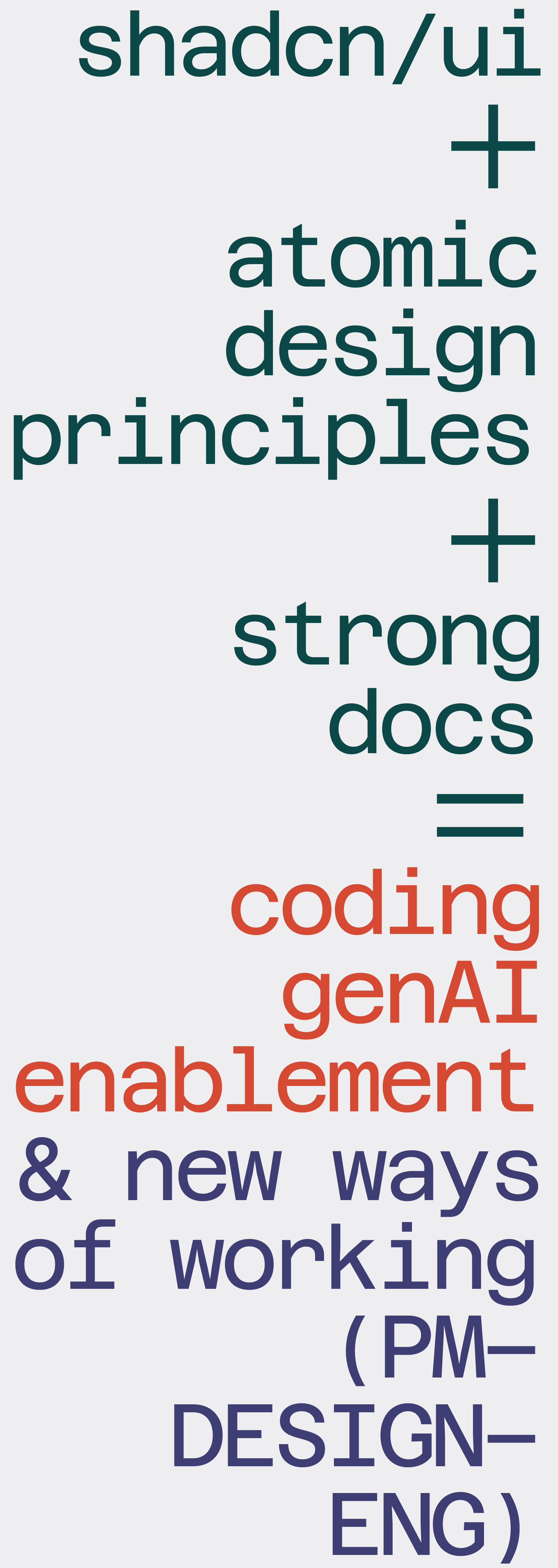
Solution in a nutshell

Branded shadcn/ui adoption: accelerates design, matures system.

Composable DLS structure: supports diverse products, fosters collaboration.

GenAI-ready tech stack: speeds prototyping, future-proofs development.

1:1 design-to-code reflection: reduces discrepancies, minimizes rework.

Empowering holistic design: less time on micro-interactions, more on overall product experience.

Lean DLS with Atomic Design: system focuses on defining core atoms, ensuring efficiency.

Develop

Building the system: components, tokens, resources, documentation, tooling

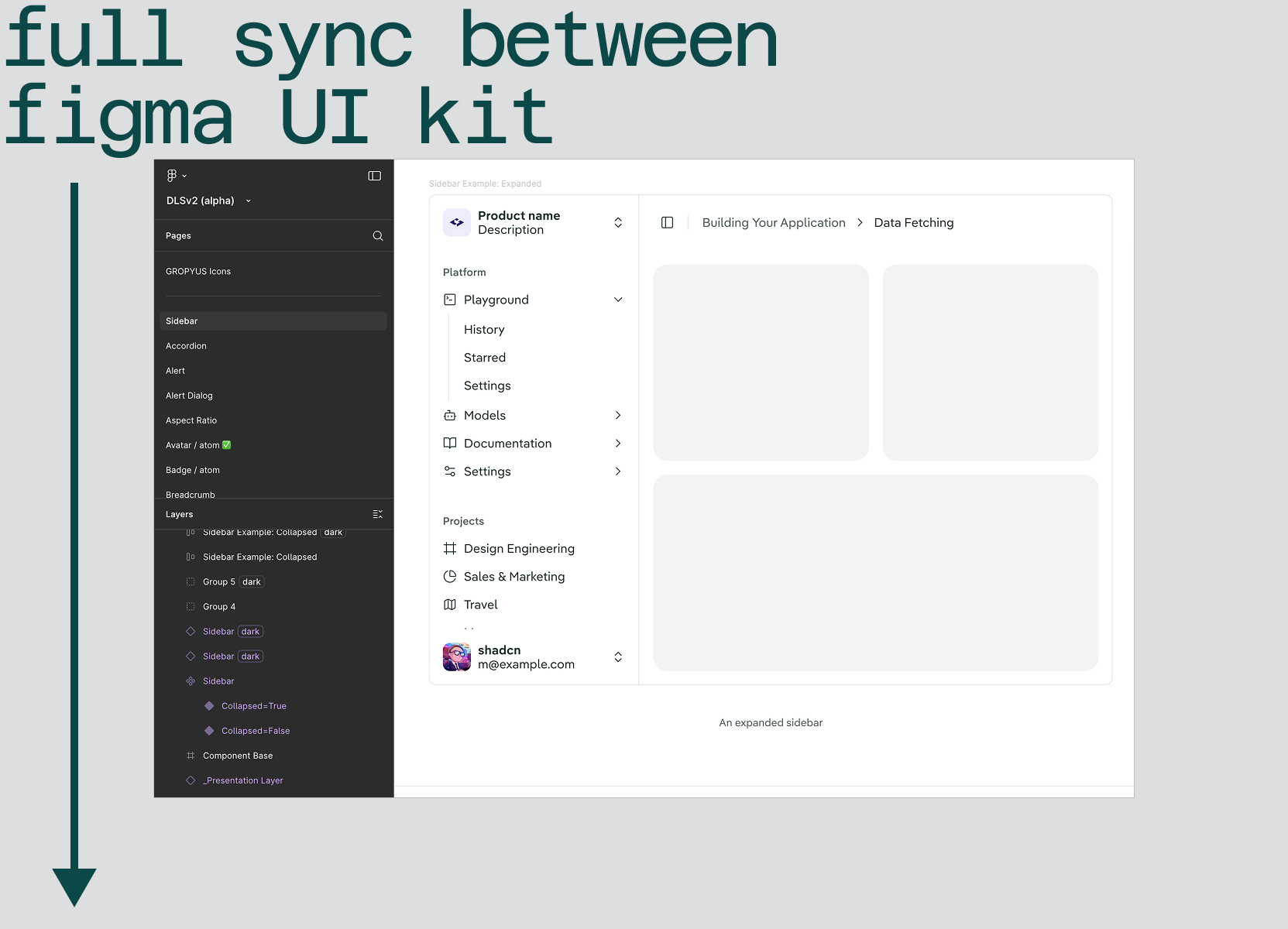
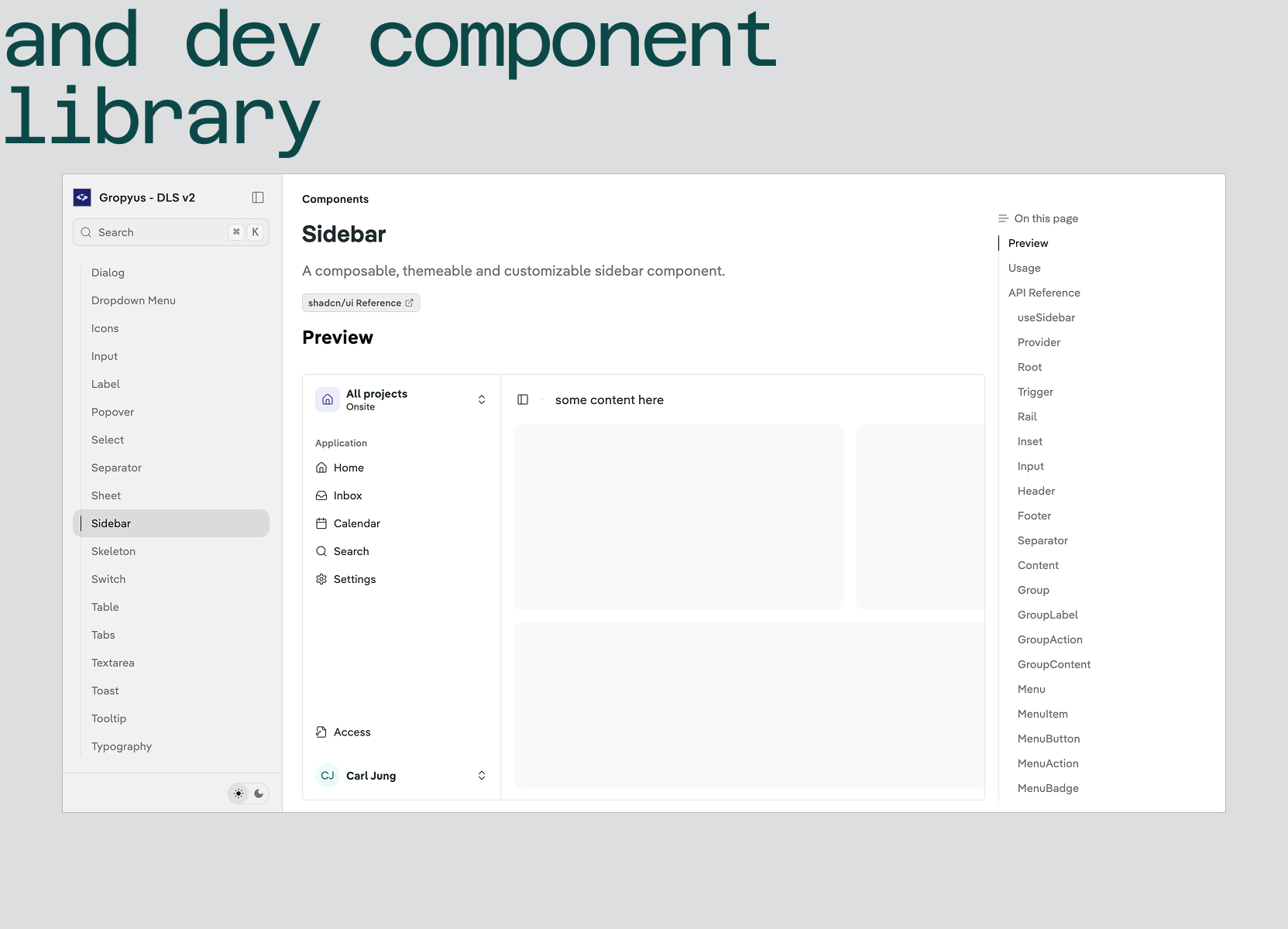
We leveraged an extensive community-built shadcn Figma UI kit, applying variables and tokens for colors, typography, and numericals, based on Tailwind CSS naming convention. Our engineering team built a component library where Figma UI kit and the component library are in full sync.

We initially choose v0.app as the AI tool for product management & design workflow, but later moved to Claude Code as the adoption of the tool grew across teams. We created 'skills' and markdown as guidance for Claude to understand our stack and access neccessary resources & documentation, enabling a streamlined output when generating prototypes & UI.

Delivery

Immediate impact & future-proof setup at 0 cost

We officially launched DLSv2 in May 2025, where we presented our new design system at a key GROPYUS product and tech event. This immediately generated strong interest, leading to numerous product managers exploring DLSv2 integration and seeking support from our small team.

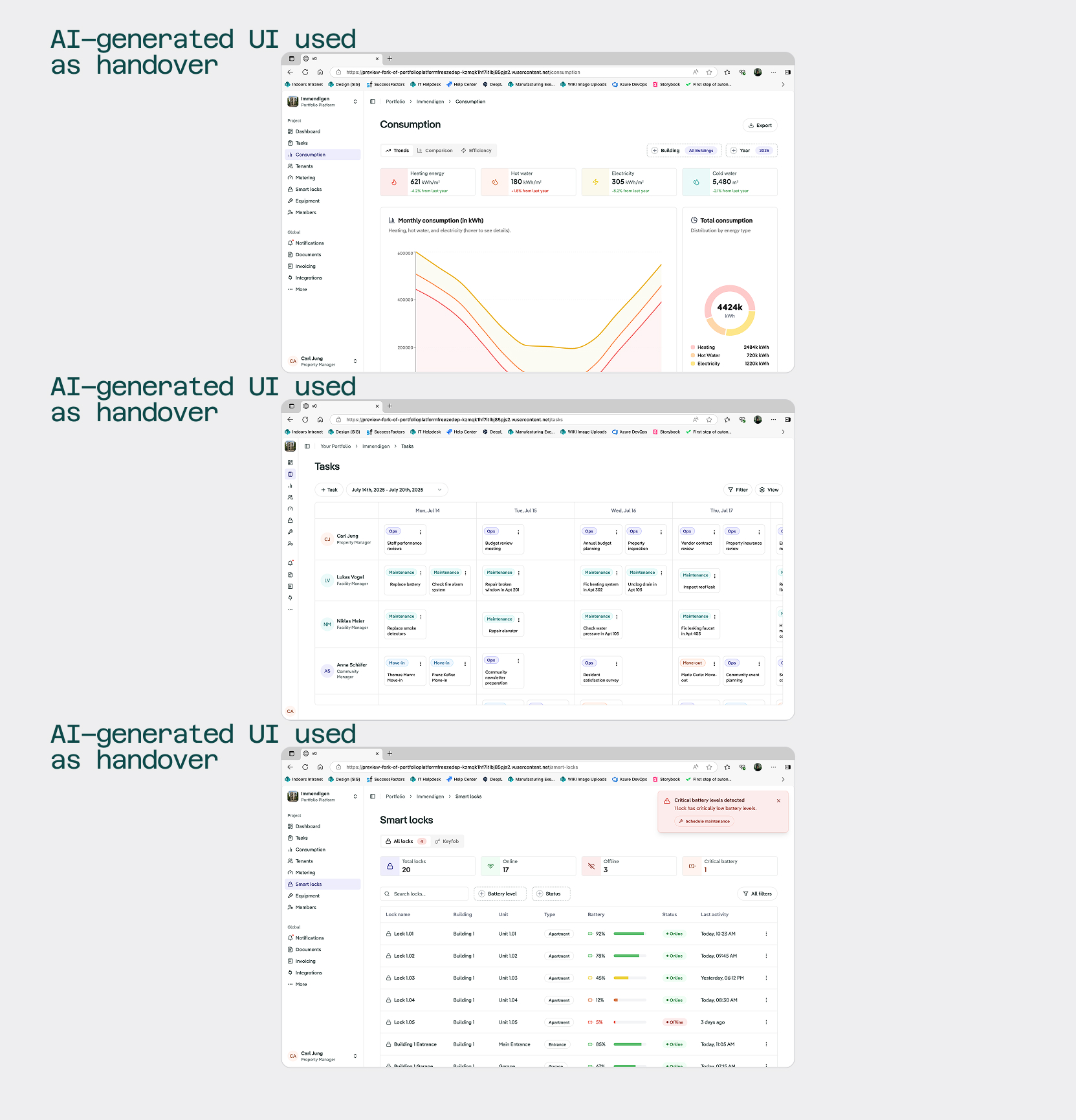
As seen in some examples on the right, PM and design are actively using gen AI tools to create UIs for user testing and customer demos, and due to the rigid structure of the design system, we achived high level of consistency for AI outputs. Some of the high-fidelity prototypes were later used as handover for development, showcasing our efficient prototyping and even code-handover capabilities.

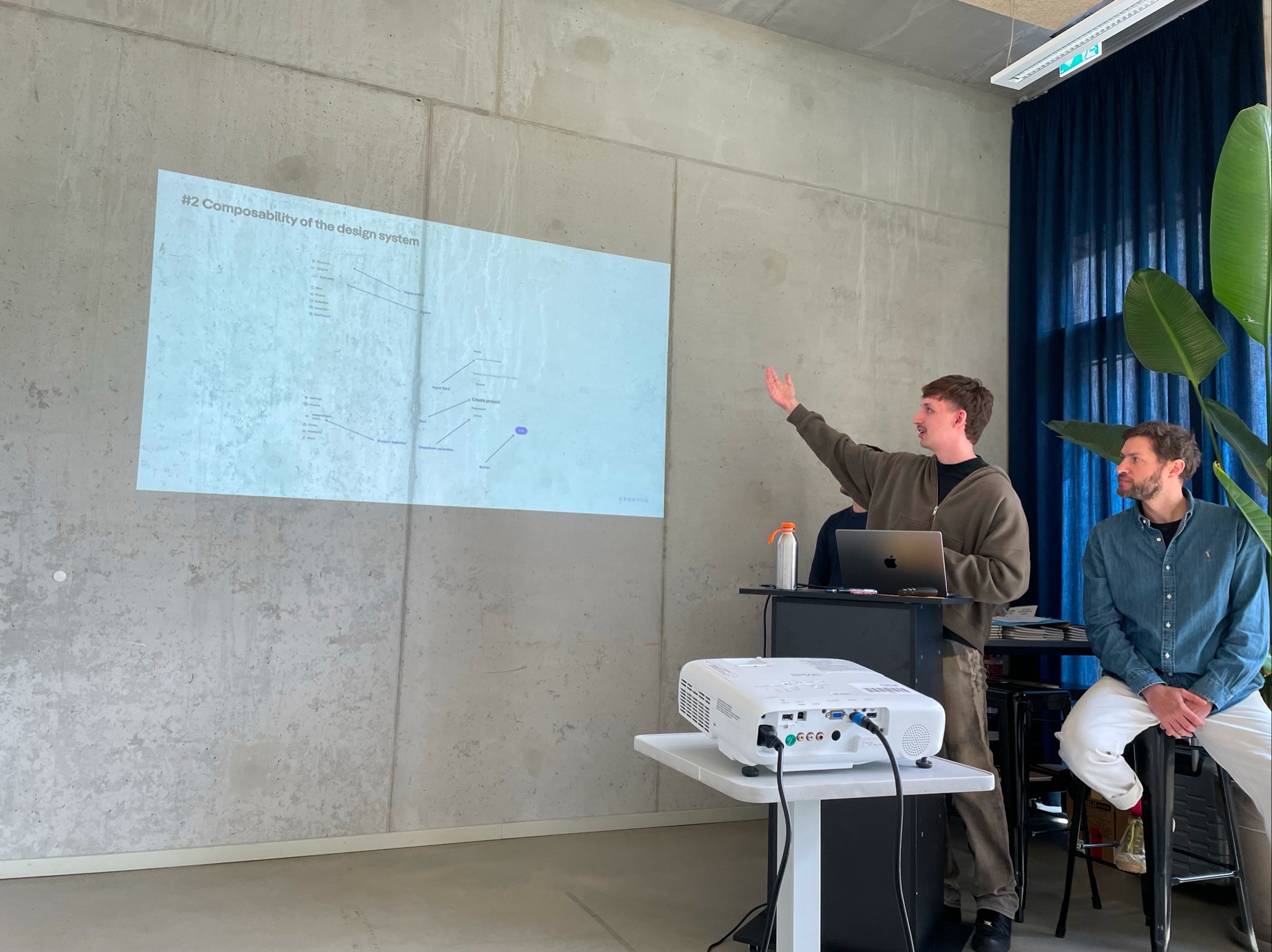
PRESENTING DLSV2 AT A COMPANY-WIDE EVENT

Case study

Process optimization & new ways of working with a composable, AI-enhanced design system

COMPANY

GROPYUS

YEAR

2025

CONTRIBUTION

PRODUCT DESIGNER, FTE

TARGET

INTERNAL, CROSS PRODUCT

SCOPE

PRODUCT DESIGN, UX/UI, RESEARCH

DLSv2 (Design Language System version 2) is the evolution of the first design system at GROPYUS, with a mission to reflect GROPYUS brand & UX principles across products, while improving time-to-design, time-to-develop, design-to-dev handover, design system maturity, composability, and enabling compatibility with coding genAI tools (for faster prototyping and 'with-code' design handovers).

In a team of 4 FE engineers and another product designer, I initiated the project by running research to identify current process bottlenecks and led the strategy to evolve the first version of the GROPYUS design system. I identified improvements, managed stakeholder communication, and guided the migration process. I delievered a fully-fledged Figma UI kit and collaborated with FE engineers to deliver a DLSv2 component library. I identified suitable coding genAI tools and documented a strategy on how to use it.

Impact

35% reduction in UI design time

30% increased software engineering efficiency

1-to-1 reflection of design-to-implementation

2x faster prototyping for user testing and demos

AI-native PM–design–engineering collaboration

With-code design handover

System actively used across 6+ products

Full system adoption within 2 weeks of release

Discovery

Understanding the problem space through process map & painpoints

I documented the complete DLSv1 component delivery lifecycle in close collaboration with both designers and frontend engineers. The goal was to map the whole component-creation process - decisions on what is a part of a design system, scoping, designing, and implementing, as well as to identify inconsistencies and time-drain, and where collaboration falls apart.

I facilitated targeted discussions/ interviews with core stakeholders - designers, frontend engineers, and product managers, as direct customers and contributors of the DLS. Their input helped uncover specific friction points across the delivery process. Furthermore, by regularly sharing progress, validating observations, and gathering feedback as new insights emerged, I kept the process transparent and inclusive.
Major painpoints

Design intent from Figma was frequently lost or misinterpreted by engineers.

Designers and engineers spent significant time aligning on behavior that wasn't well-documented.

Final implementations often didn't match the intended user experience.

Implementation libraries varied, leading to inconsistent behavior across products.

Components were often rebuilt from scratch without clear reuse guidance.

Design specs lacked clarity, especially around micro-interactions and edge cases.

Constraints

DLS is an initiative with volunteering-based contribution model. With low priority and without a dedicated team, production and maintenance are compromised.

GROPYUS has 10+ digital products with UI, and only 4 product designers. All products varied majorly in terms of the type (internal, B2B, B2C) and the industry — it's very difficult to enable sufficient support and have a 'one-fit-all' solution.

Opportunities

Minimal legacy debt: GROPYUS's extensive portfolio of MVP-stage products presents an opportunity for agile changes since there are no strict legacy constraints.

Early validation culture: GROPYUS's innovative strategy allows showcasing immature prototypes and demos to potential customers/users, enabling rapid validation of new product concepts before full development.

Definition

Translating findings into a context-aware, scalable, solution

We decided to adopt a default shadcn/ui library as a starting point, applying our brand, UX principles, and neccessary adjustments, in order to streamline design-to-development time and maturing the system. This allows our short-staffed teams to shift focus towards crafting overarching digital experiences rather than focusing on defining and implementing micro-interactions of individual web components.

We set up a composable design system following Atomic Design Methodology, where DLSv2 mainly defines basic 'atoms.' Since GROPYUS has many different products, bigger patterns made for specific products are carefully checked if they can be used across others. This keeps our main design system light, adding only parts that are evaluated as 'cross-product reusable'.
Our strategic choice to build DLSv2 upon shadcn/ui unlocks a powerful synergy with coding genAI tools. Since many of these tools are trained to generate frontend code using shadcn/ui as a foundational library, and since at GROPYUS we build frontends as next.js apps, feeding our defined GROPYUS token values and styles in Tailwind CSS format allows us to leverage AI capabilities to our distinct advantage.

This design system-level symbiosis enables a new way of working between product management, design, and engineering. In an AI-native setup, i.e. with Claude Code, functional code prototypes are created much earlier, directly within the codebase and based on the defined design system. In some cases, PM can use Claude Code to prototype instead of write PRDs, designer enhances the prototype, enables it for user testing, refines based on findings and prepares it as ready-for development with code, which devs use to integrate it into production.
Solution in a nutshell

Branded shadcn/ui adoption: accelerates design, matures system.

Composable DLS structure: supports diverse products, fosters collaboration.

GenAI-ready tech stack: speeds prototyping, future-proofs development.

1:1 design-to-code reflection: reduces discrepancies, minimizes rework.

Empowering holistic design: less time on micro-interactions, more on overall product experience.

Lean DLS with Atomic Design: system focuses on defining core atoms, ensuring efficiency.

Develop

Building the system: components, tokens, resources, documentation, tooling

We leveraged an extensive community-built shadcn Figma UI kit, applying variables and tokens for colors, typography, and numericals, based on Tailwind CSS naming convention. Our engineering team built a component library where Figma UI kit and the component library are in full sync.

We initially choose v0.app as the AI tool for product management & design workflow, but later moved to Claude Code as the adoption of the tool grew across teams. We created 'skills' and markdown as guidance for Claude to understand our stack and access neccessary resources & documentation, enabling a streamlined output when generating prototypes & UI.
Delivery

Immediate impact & future-proof setup at 0 cost

We officially launched DLSv2 in May 2025, where we presented our new design system at a key GROPYUS product and tech event. This immediately generated strong interest, leading to numerous product managers exploring DLSv2 integration and seeking support from our small team.

As seen in some examples on the right, PM and design are actively using gen AI tools to create UIs for user testing and customer demos, and due to the rigid structure of the design system, we achived high level of consistency for AI outputs. Some of the high-fidelity prototypes were later used as handover for development, showcasing our efficient prototyping and even code-handover capabilities.
PRESENTING DLSV2 AT A COMPANY-WIDE EVENT

OTHER WORK