GROPYUS Home is the primary tenant-facing digital channel across all GROPYUS apartments – a single app that needs to work across buildings with different hardware setups, serve diverse tenant needs, and scale across the portfolio.
I led the design effort alongside a project lead and brand designer at GROPYUS, with an external design agency involved during the development phase.
I defined the strategic direction and UX mental model, ran a design sprint, synthesized user research, performed market research and competitor analysis, participated in defining the new feature set, managed stakeholders across product, tech, sustainability, research, and sales teams, delivered information architecture and wireframes, and collaborated on high-fidelity UI push.
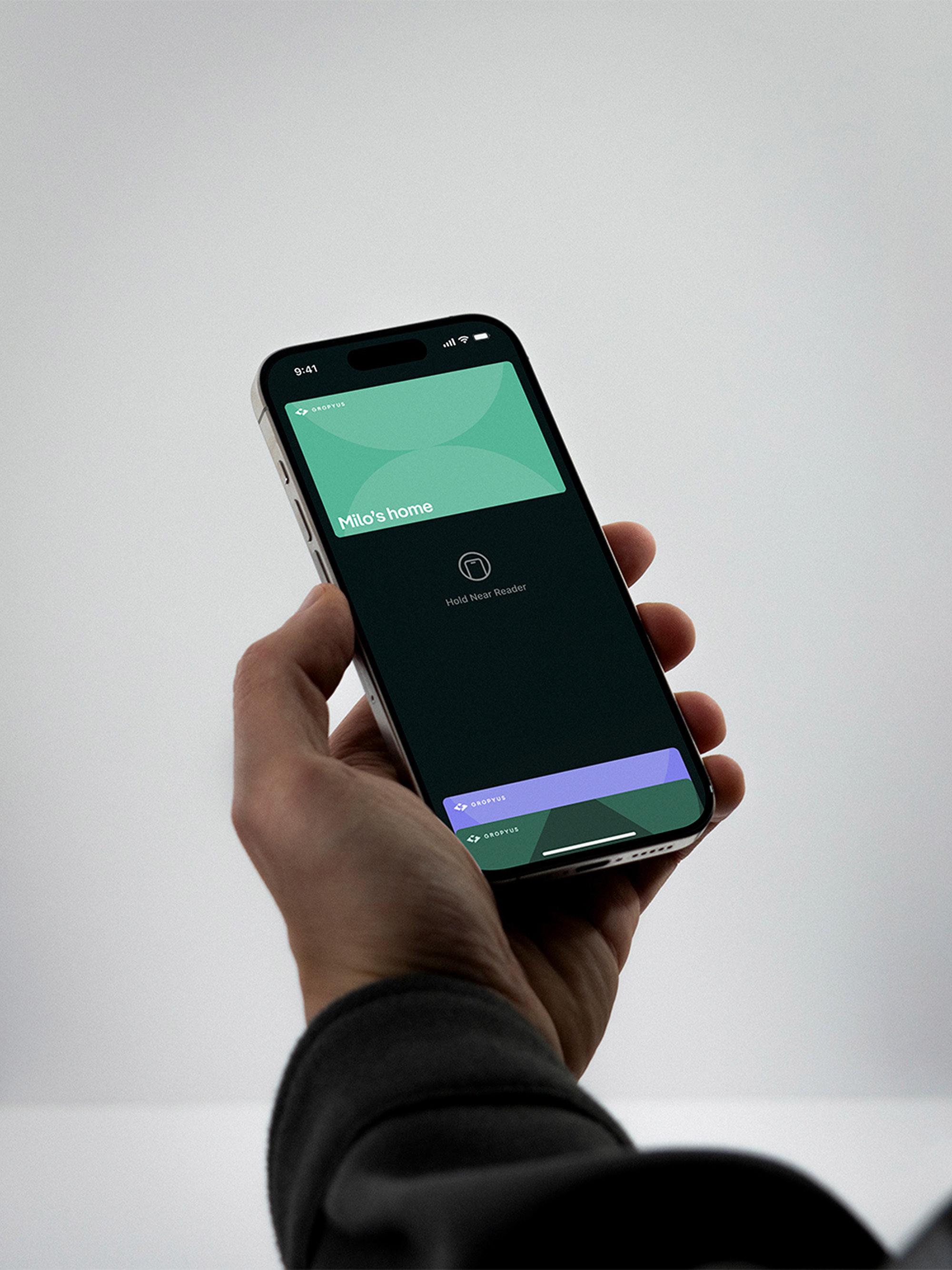
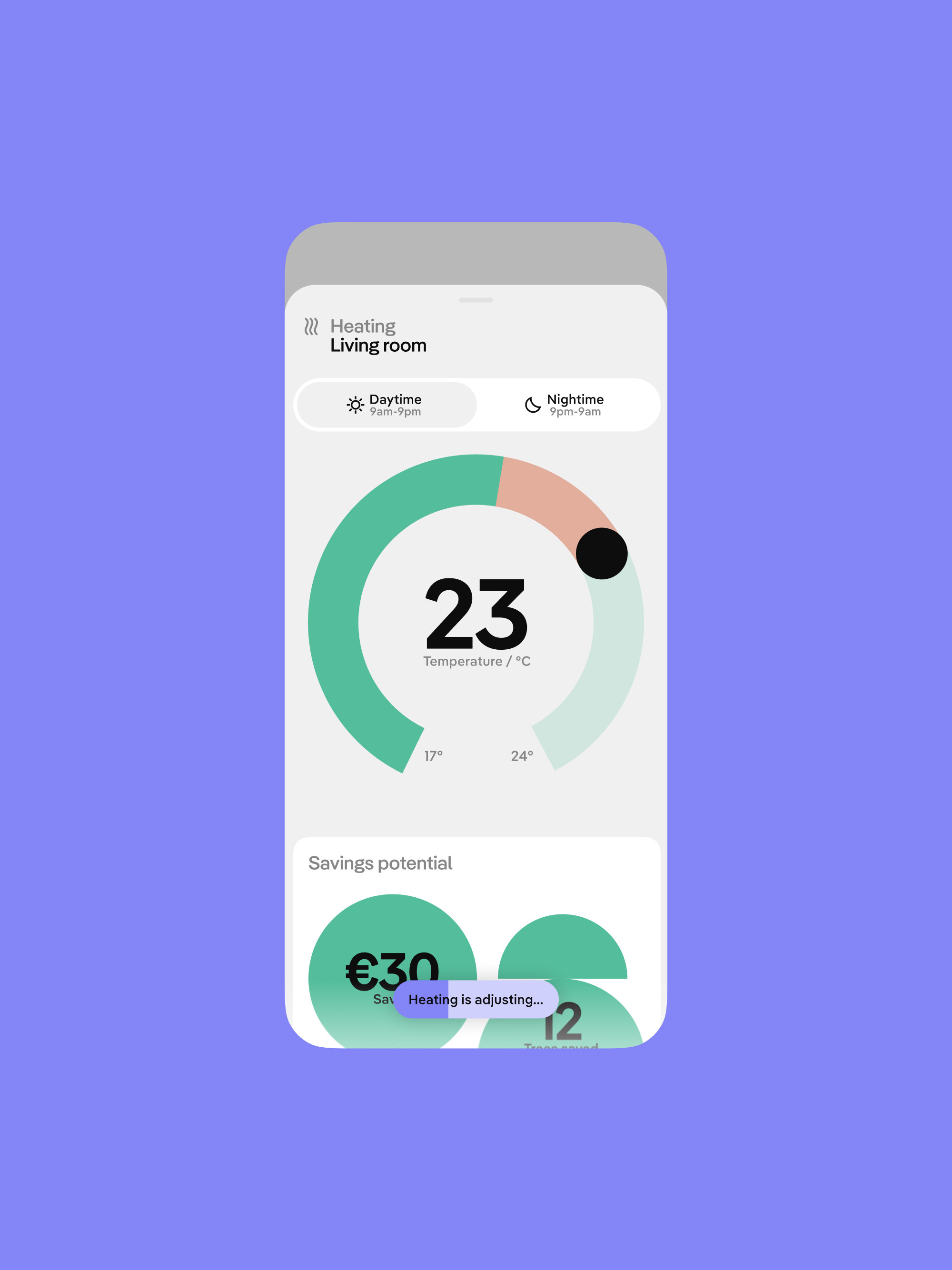
The redesign shifted the product vision from a static remote control to a modular, real-time digital home companion: smart home controls, energy insights, keyless access, and tenant services, all built on one adaptive UX backbone.
I utilized existing qualitative research based on tenant interviews and feedback on the current app use, ran a UX audit, and organized a workshop with the design team, PM, and tech to collectively map frictions and UX pitfalls. Alongside this, I conducted market research, industry trend analysis, and competitor research across all key feature areas.
I mapped user journeys through the 'moments that matter' framework to understand where the expansion into real-time feedback, sustainability, and proactive communication could create meaningful new value for tenants.
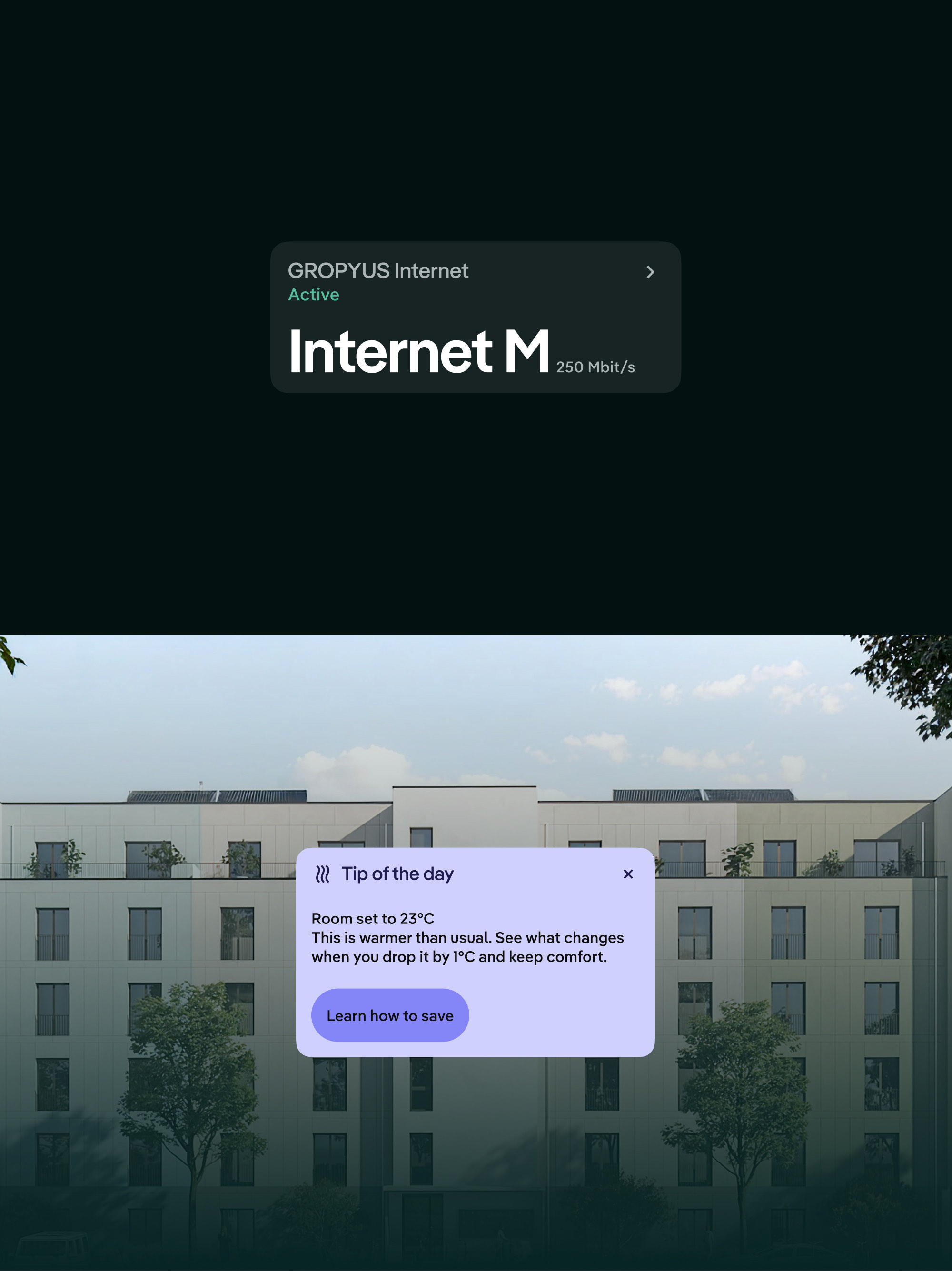
The core direction was to evolve the app from a smart home remote into a proactive digital companion – real-time, communicative, and sustainability-focused. Key to this was establishing a modular architecture: one UX backbone that adapts per building configuration, avoids product fragmentation, and enables scalable rollout across GROPYUS's portfolio, with future-readiness for white-labeling and services monetization.
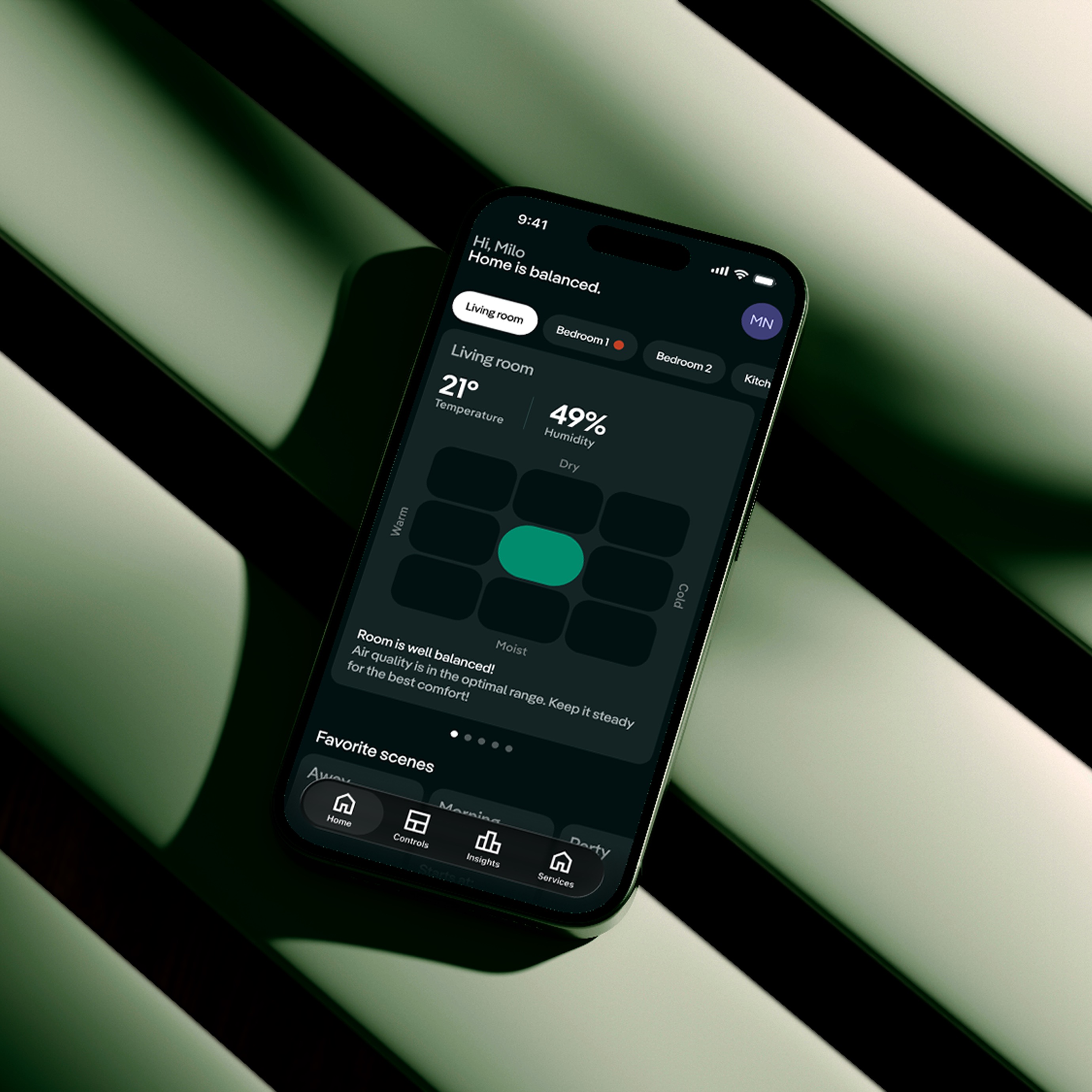
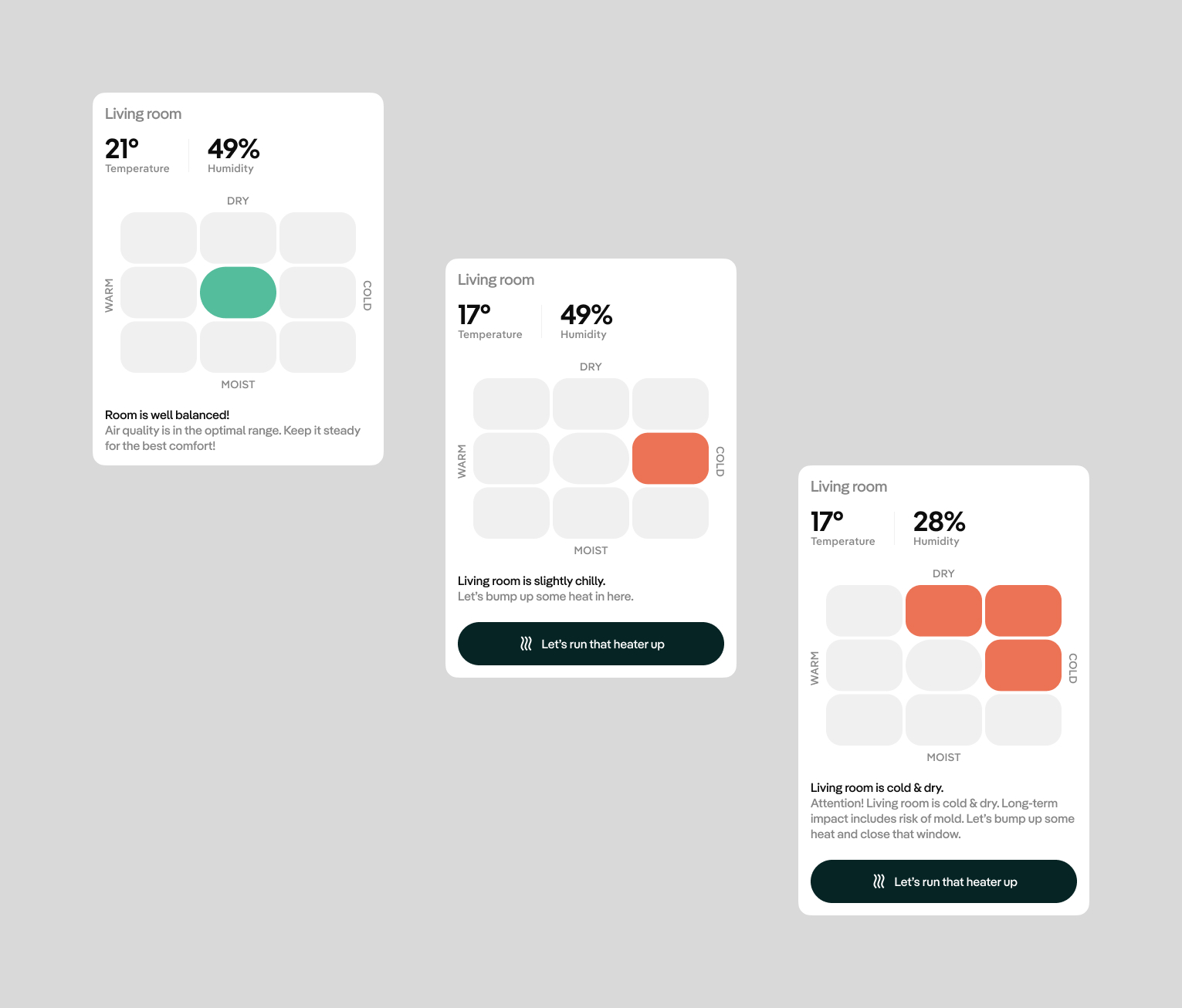
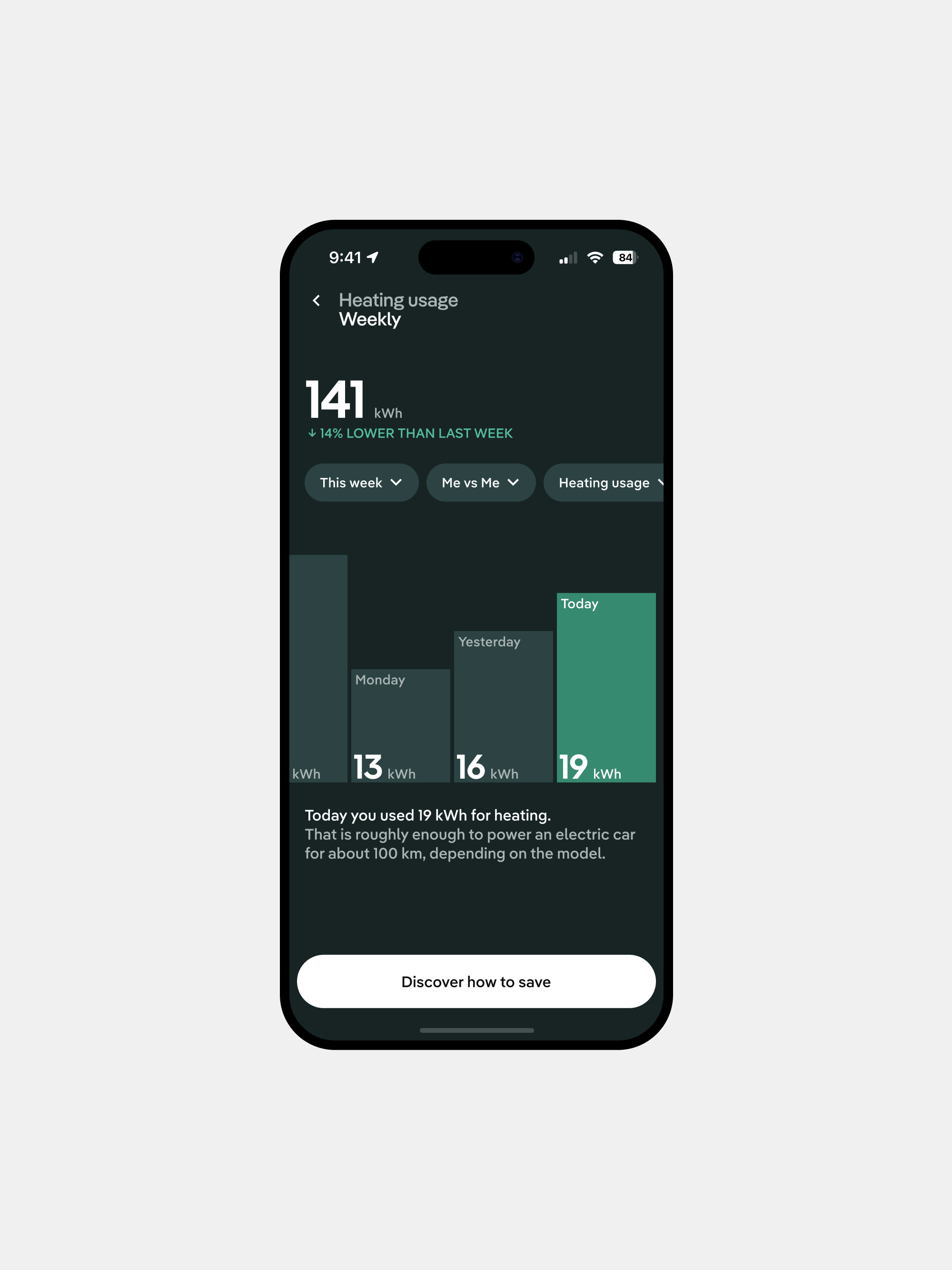
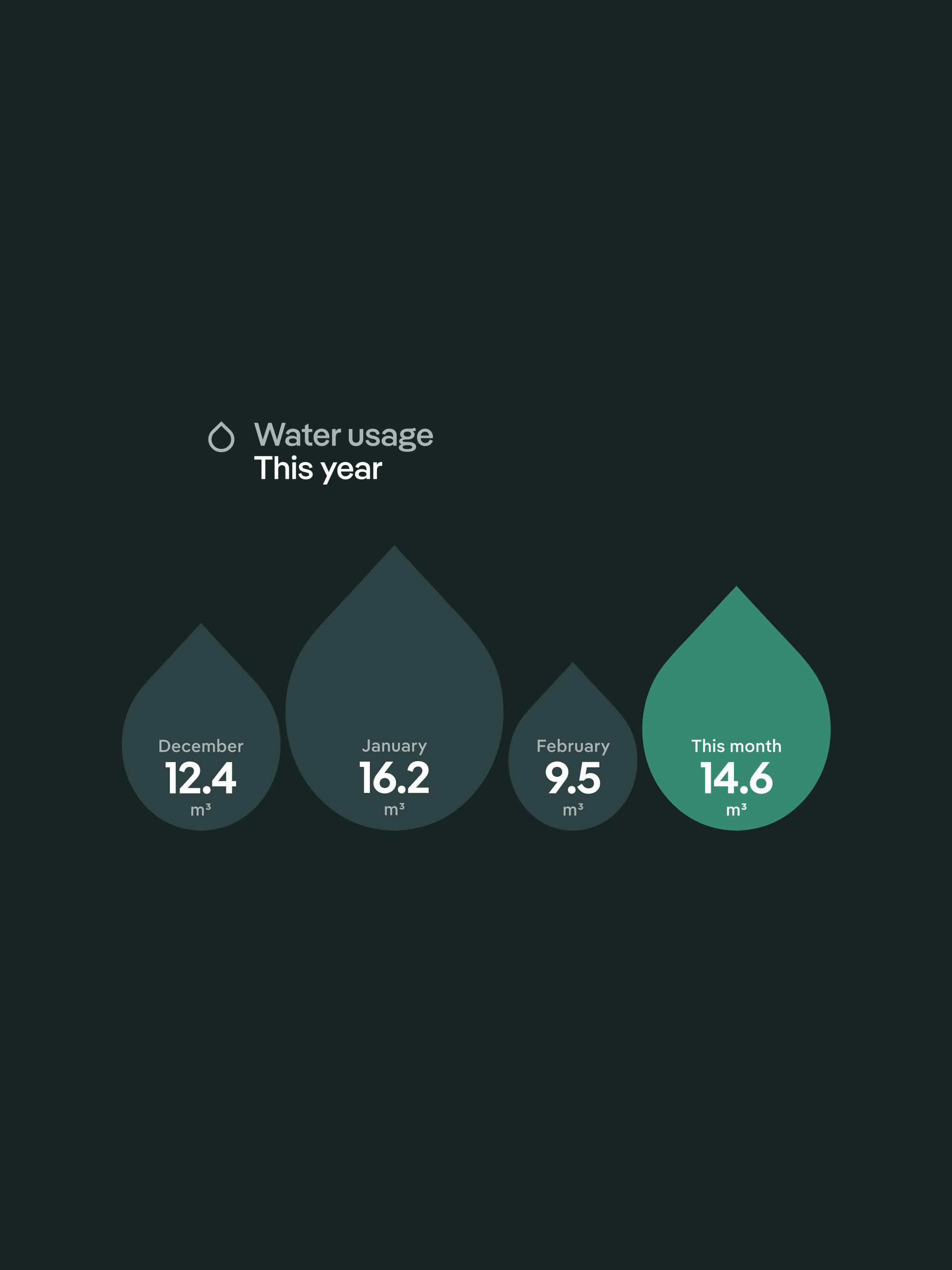
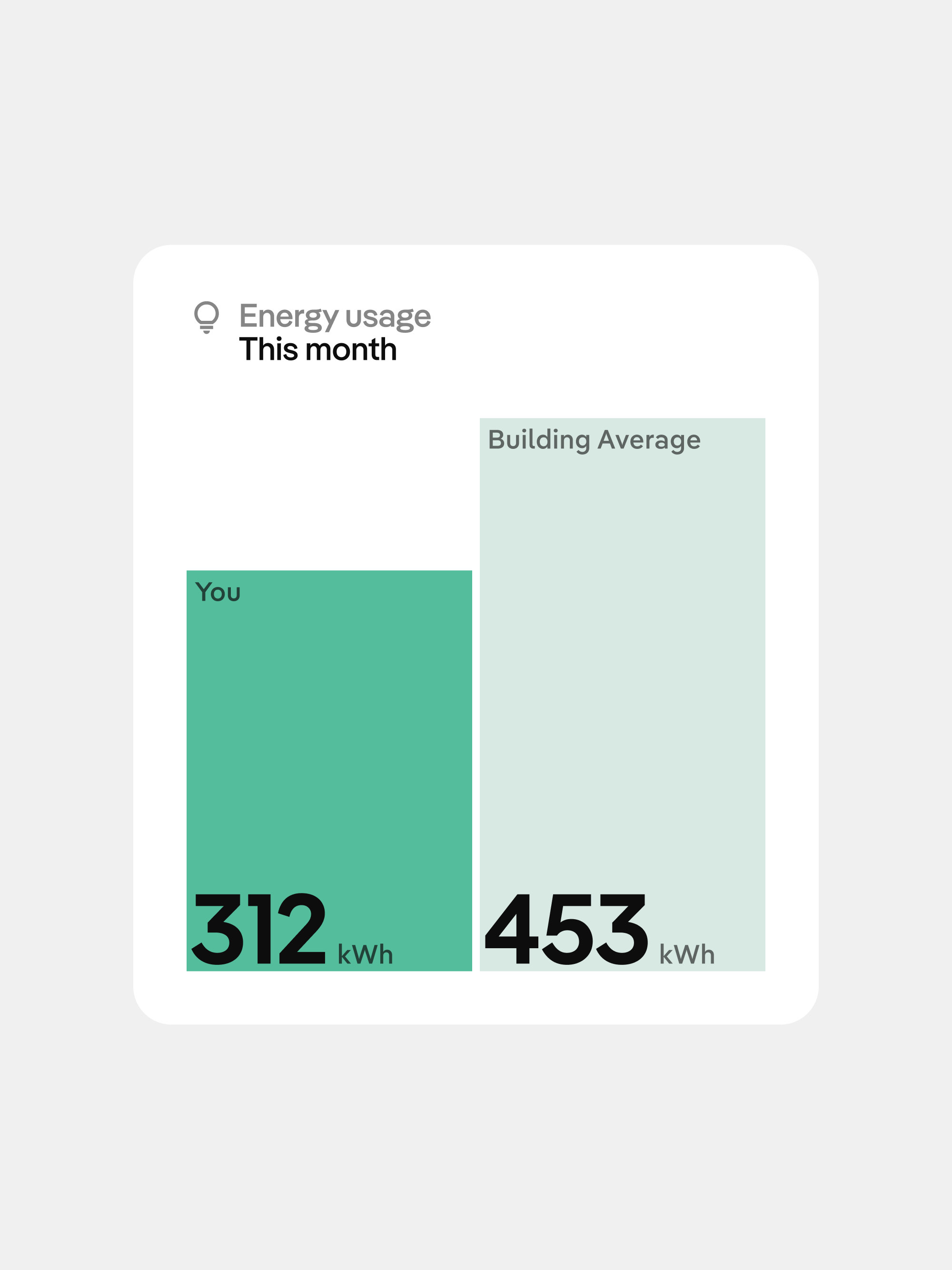
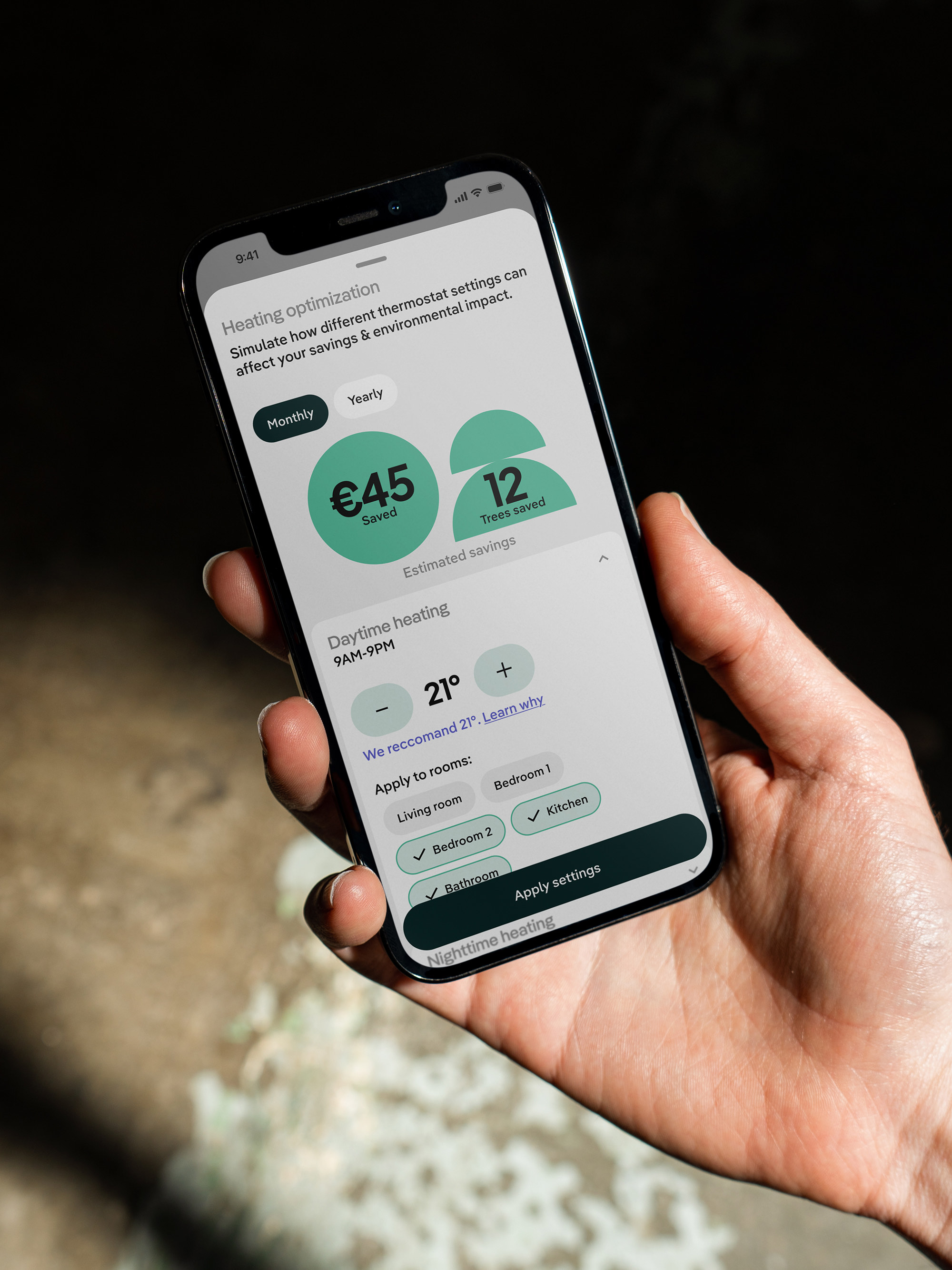
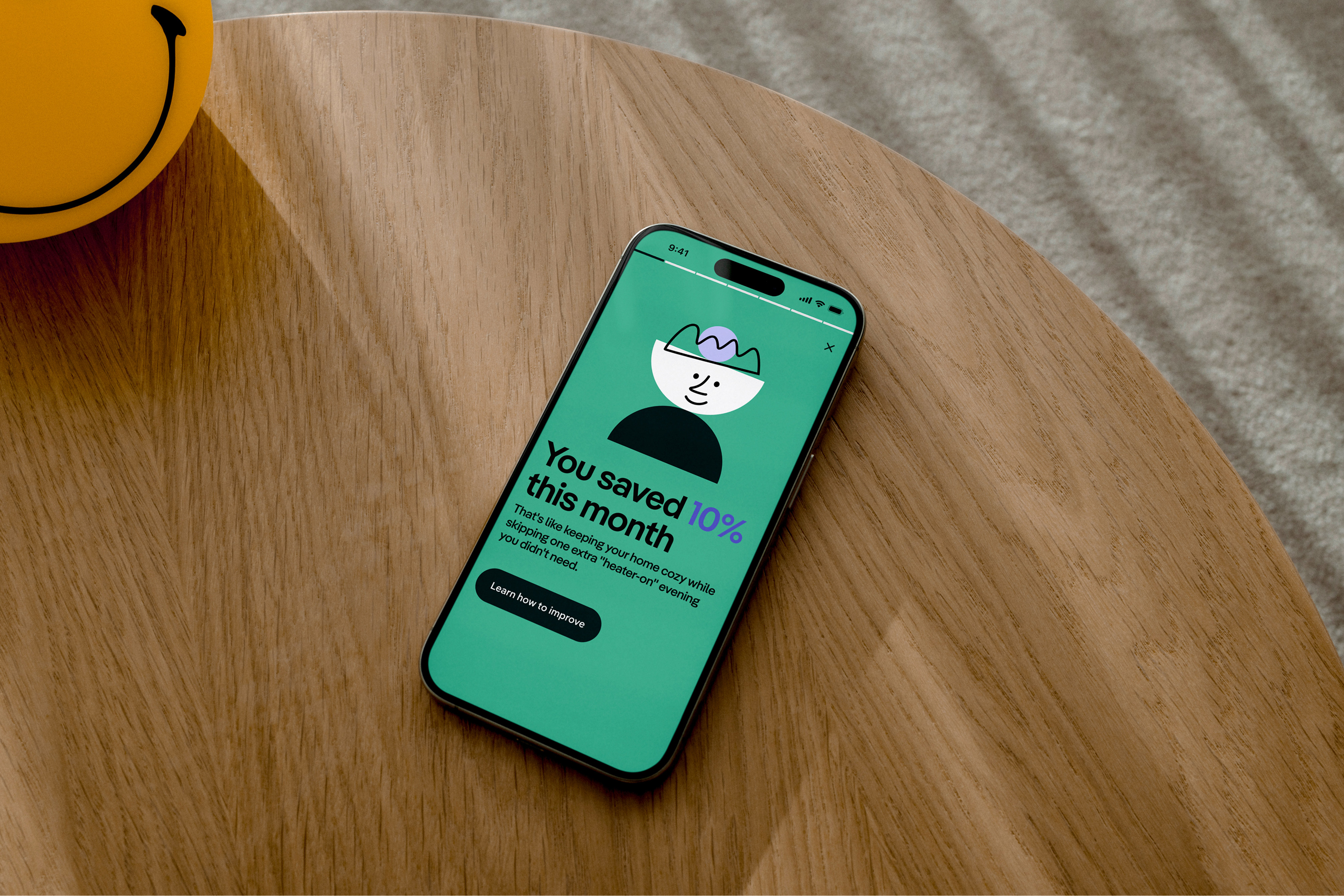
In collaboration with the external design agency, we integrated the new GROPYUS B2C brand into the product. The visual direction is grounded in Swiss design principles: rational grids, modular card surfaces, bold numerals for glanceable data, and an on-brand color system.
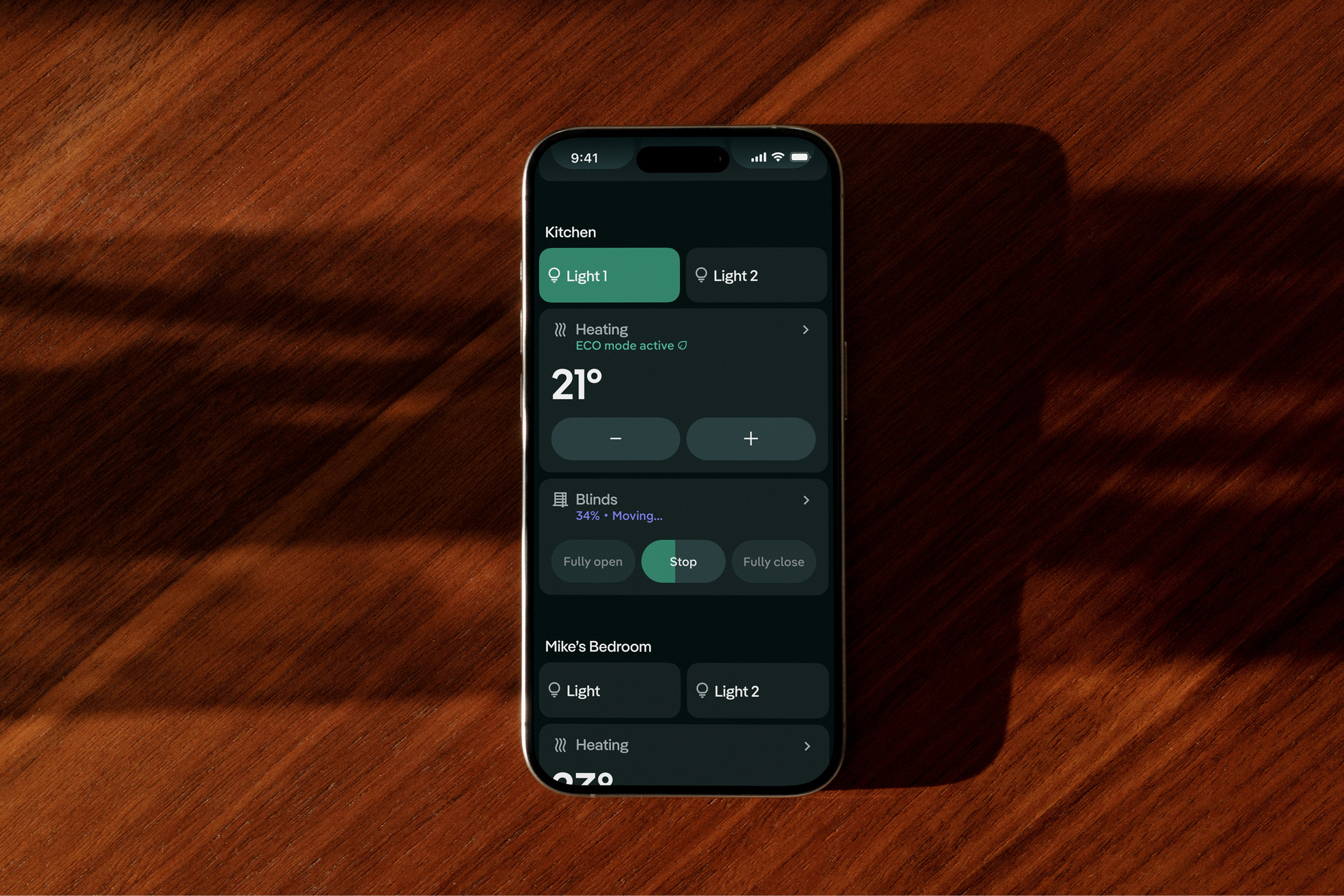
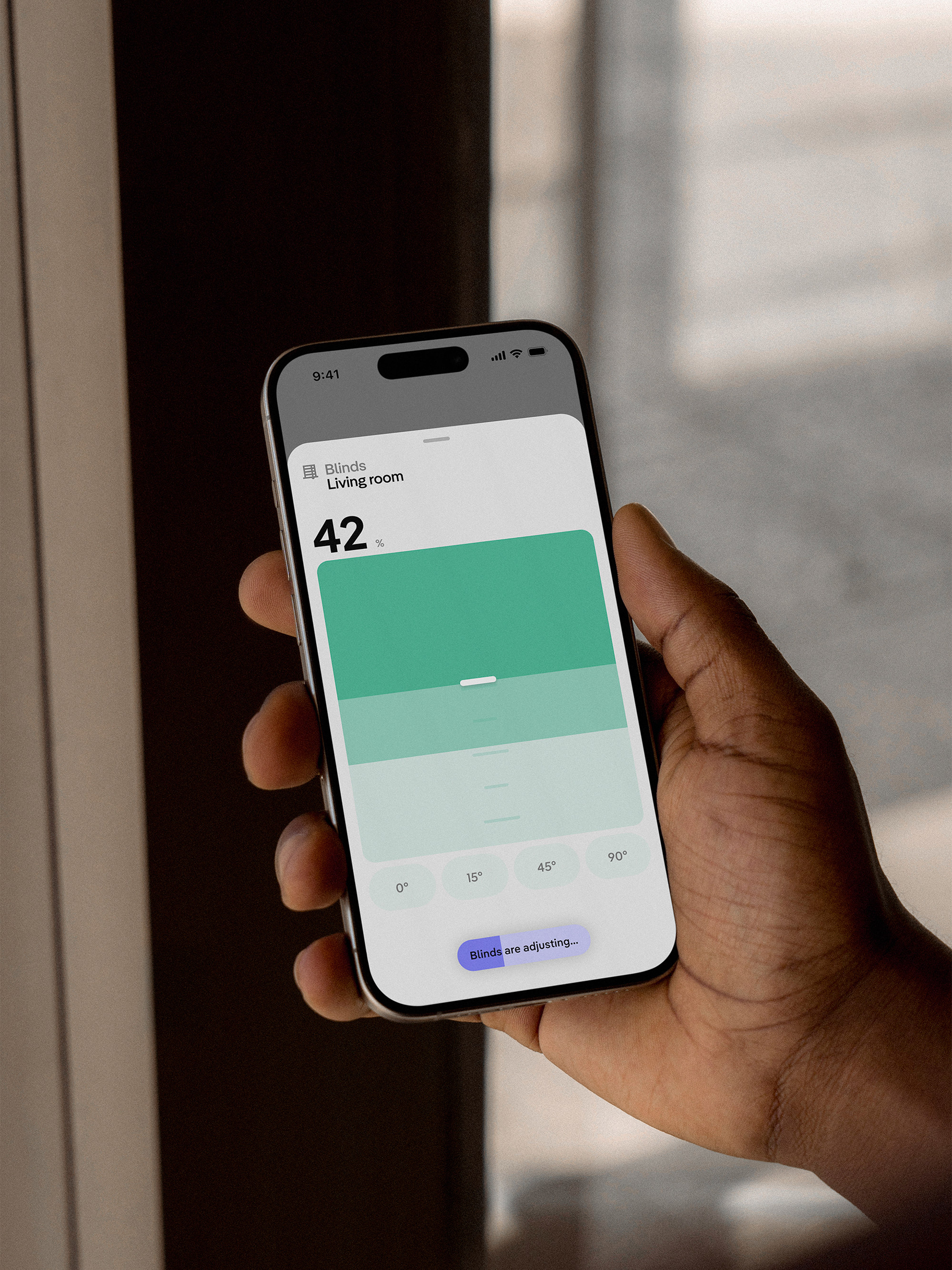
We delivered high-fidelity UI and user flows across three distinct app areas, while ensuring that a) visual design is grounded in the defined brand identity and b) experiences are scalable according to the modular architecture.
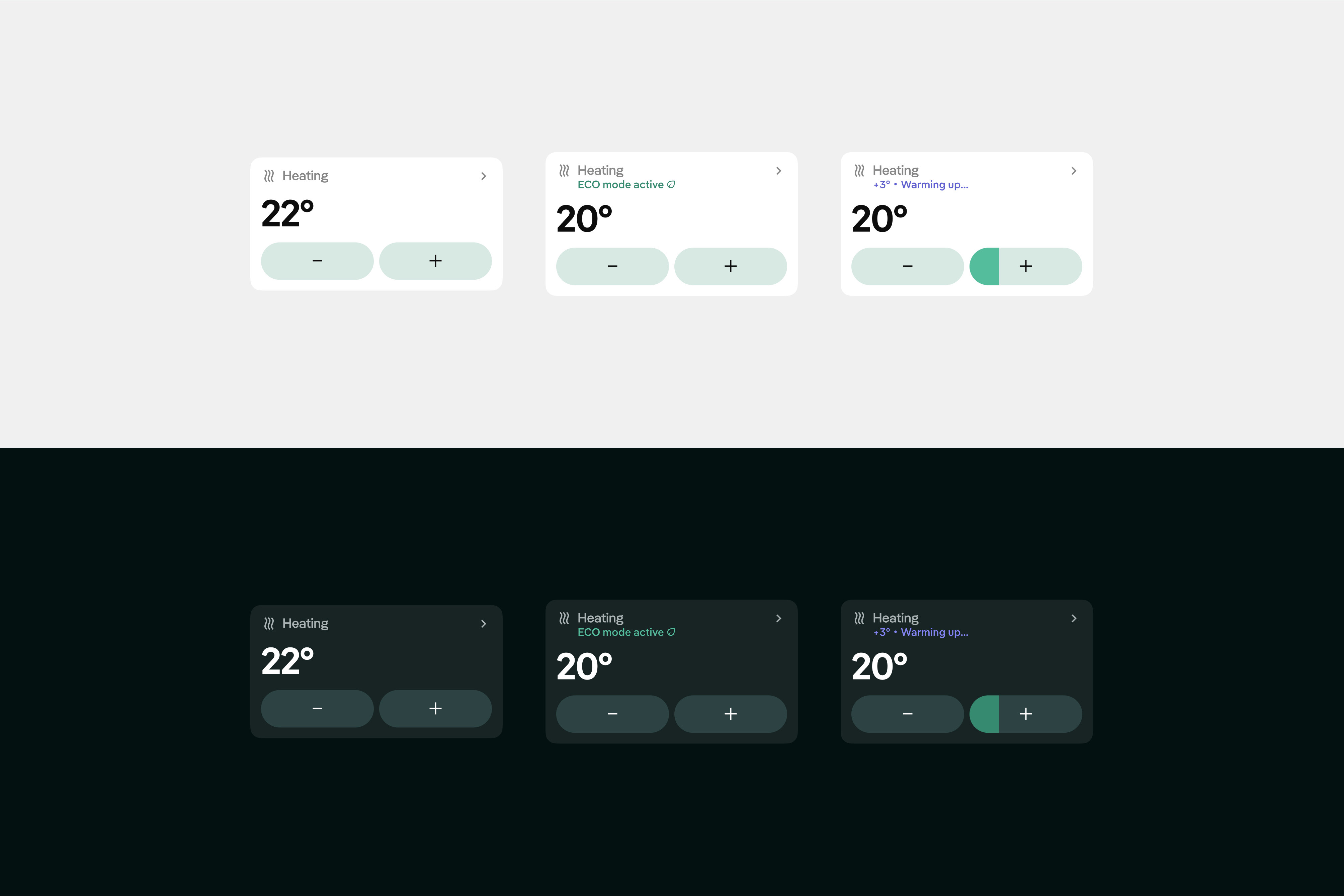
We established a mobile design system for iOS and Android, crafting components, defining consistent rules, and making them composable, while ensuring that the naming conventions, component documentation, and usage specs provide relevant context for agent-assisted developmentent.
The redesign directly addresses all 5 KPIs – adoption & retention, app store rating, ease of use, improved features and information architecture, and GROPYUS brand promotion. It introduces a real-time, modular digital home companion with a new visual identity, a unified IA across all app areas, a full new and revisited feature set, and an agentic-ready mobile design system for iOS and Android.
As the sole designer supporting engineering, I continue detailing interaction patterns, haptics, screens, and user flows, and standardizing the design system to ensure production-ready handover.
GROPYUS Home is the primary tenant-facing digital channel across all GROPYUS apartments – a single app that needs to work across buildings with different hardware setups, serve diverse tenant needs, and scale across the portfolio.
The redesign shifted the product vision from a static remote control to a modular, real-time digital home companion: smart home controls, energy insights, keyless access, and tenant services, all built on one adaptive UX backbone.
I led the design effort alongside a project lead and brand designer at GROPYUS, with an external design agency involved during the development phase.
I defined the strategic direction and UX mental model, ran a design sprint, synthesized user research, performed market research and competitor analysis, participated in defining the new feature set, managed stakeholders across product, tech, sustainability, research, and sales teams, delivered information architecture and wireframes, and collaborated on high-fidelity UI push.
Discovery
Understanding current pitfalls through UX audit, research synthesis, and identifying new opportunities
I utilized existing qualitative research based on tenant interviews and feedback on the current app use, ran a UX audit, and organized a workshop with the design team, PM, and tech to collectively map frictions and UX pitfalls. Alongside this, I conducted market research, industry trend analysis, and competitor research across all key feature areas.
I mapped user journeys through the 'moments that matter' framework to understand where the expansion into real-time feedback, sustainability, and proactive communication could create meaningful new value for tenants.
Definition
From static smart controls to a real-time digital living companionship: mental model, information architecture, wireframes, and brand integration
The core direction was to evolve the app from a smart home remote into a proactive digital companion – real-time, communicative, and sustainability-focused. Key to this was establishing a modular architecture: one UX backbone that adapts per building configuration, avoids product fragmentation, and enables scalable rollout across GROPYUS's portfolio, with future-readiness for white-labeling and services monetization.
In collaboration with the external design agency, we integrated the new GROPYUS B2C brand into the product. The visual direction is grounded in Swiss design principles: rational grids, modular card surfaces, bold numerals for glanceable data, and an on-brand color system.
Development
High-fidelity UI, user flows, and a cross-platform, agentic-ready design system
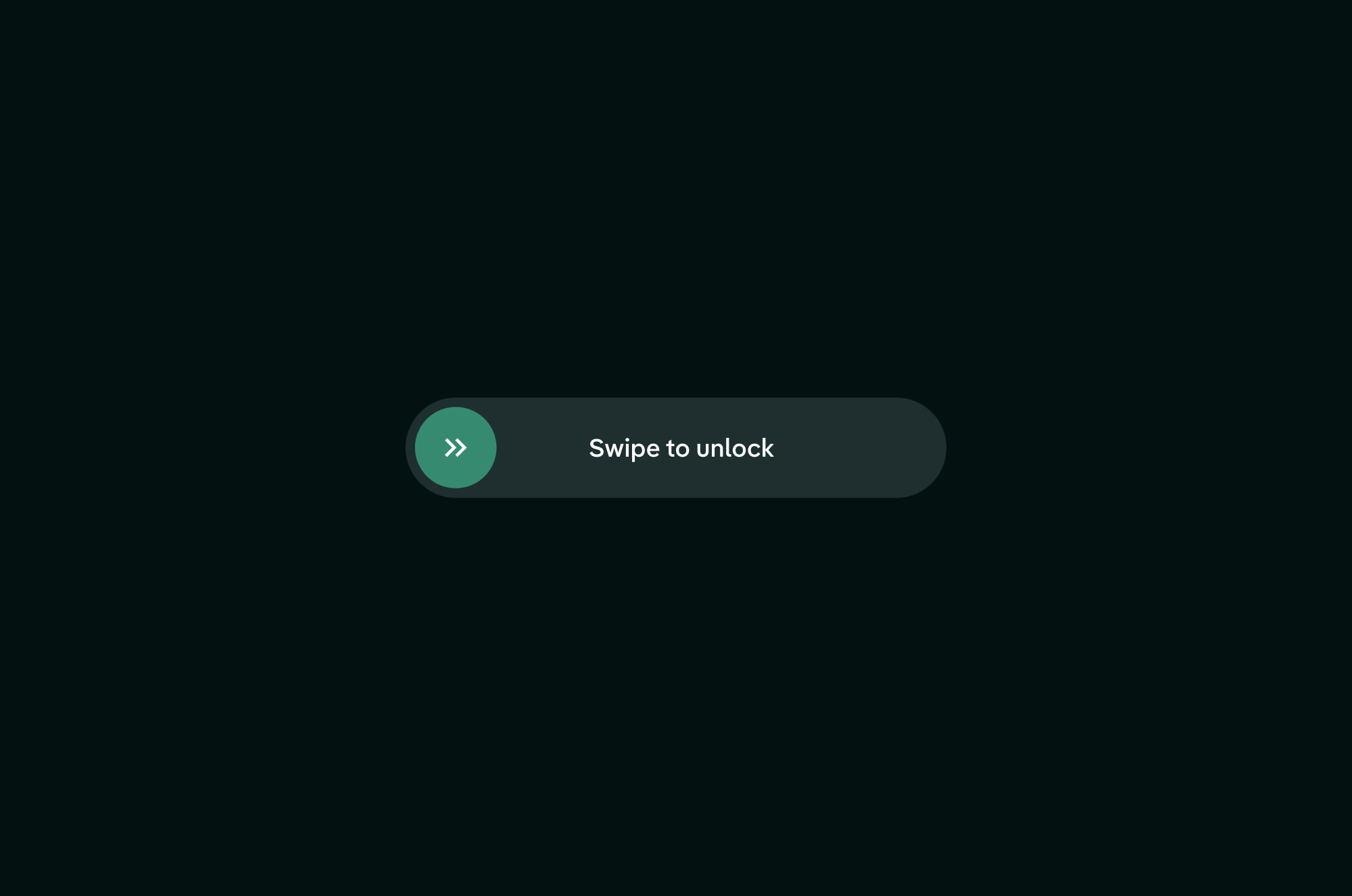
We delivered high-fidelity UI and user flows across three distinct app areas, while ensuring that a) visual design is grounded in the defined brand identity and b) experiences are scalable according to the modular architecture.
We established a mobile design system for iOS and Android, crafting components, defining consistent rules, and making them composable, while ensuring that the naming conventions, component documentation, and usage specs provide relevant context for agent-assisted developmentent.
Delivery
App in active development, full release expected Q4 2026
The redesign directly addresses all 5 KPIs – adoption & retention, app store rating, ease of use, improved features and information architecture, and GROPYUS brand promotion. It introduces a real-time, modular digital home companion with a new visual identity, a unified IA across all app areas, a full new and revisited feature set, and an agentic-ready mobile design system for iOS and Android.
As the sole designer supporting engineering, I continue detailing interaction patterns, haptics, screens, and user flows, and standardizing the design system to ensure production-ready handover.